
If you drive a vehicle for business, there’s a meaningful update for tax year 2026 you need on your radar. The IRS has just raised the standard mileage rate for business use to 72.5 cents per mile, up from 70 cents last year. This change affects how you calculate your mileage deduction and employee reimbursements for 2026.
Let’s break down what this means for you and how to put it to work.
What Exactly Changed
Starting January 1, 2026, the IRS mileage rate you can use to calculate your deduction or reimbursable business travel:
72.5 cents per mile for business driving.
That rate applies to all common business vehicles you might use, including:
- Cars, vans, pickups, panel trucks
- Gas, diesel, hybrid, and electric vehicles
It’s optional. You can choose between:
Actual cost method (potentially more tax-efficient but more complex)
Standard mileage rate (simplest)
Why the Update Matters for Business Owners
This is more than just a cents-per-mile headline. Every mile your team drives for sales calls, client meetings, deliveries, or service calls translates directly into deductible expense or reimbursable cost. A bump from 70¢ to 72.5¢ doesn’t seem huge on paper, but it adds up fast:
- 1,000 business miles = $725 deduction
- 2,000 miles = $1,450 deduction
That extra 2.5¢ alone adds $25 per 1,000 miles in deductible value. Stretch that across a fleet or heavy travel year and it becomes real d
Standard Mileage vs. Actual Expense
Here’s the tradeoff decision:
Standard Mileage Rate (72.5¢)
- Easiest to calculate
- No tracking of gas, oil changes, repairs
- Just log miles
Actual Expense Method
- Track fuel, insurance, maintenance, depreciation
- Works better if your vehicle costs exceed the standard rate
- Harder recordkeeping
For most small business owners who aren’t tracking every car expense, the standard mileage rate will remain the simplest, most effective route. But if you run high-cost vehicles or a fleet, run the numbers both ways before filing.
Recordkeeping Still Matters
Your deduction only works if you can substantiate it. The IRS expects a contemporaneous mileage log that includes:
- Date
- Starting point and destination
- Business purpose
- Miles driven
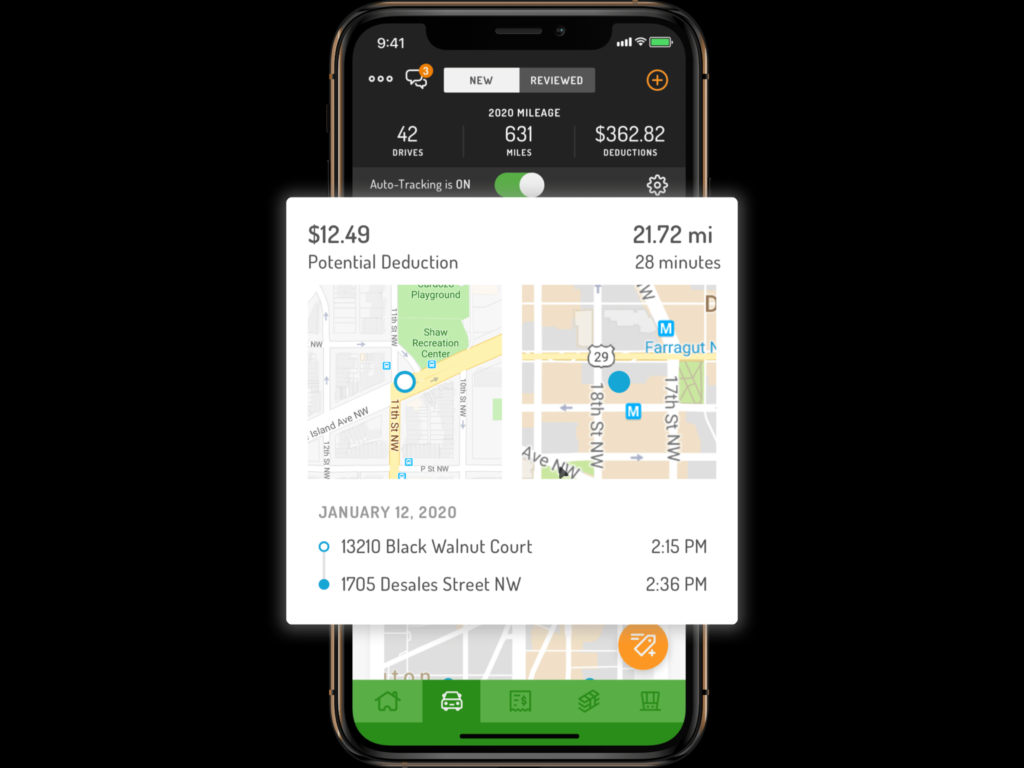
Old scribbled notes or annual reconstructions aren’t IRS-audit proof. Automate your mileage tracking with an app or GPS tool to protect the deduction and save time.
Tips for Small Business Owners
Here’s how to maximize the update:
- Switch to real-time mileage logging now
Investing in automatic tracking eliminates manual error and builds audit-ready records. - Set or update reimbursement policies
If you reimburse employees, align your books with the 72.5¢ rate for 2026 to avoid taxable fringe issues. - Check before choosing actual costs
For high-maintenance vehicles, run a comparison to confirm the standard rate still wins. - Train your team
Make sure they understand what qualifies (business trips) vs what does not (commute miles).
Bottom Line
For 2026, the IRS mileage deduction just got more generous. The standard rate is 72.5¢ per mile for business travel, giving small business owners a straightforward way to claim vehicle costs. Track it properly and you can secure meaningful tax savings without the bookkeeping burden of actual expenses.
FAQ
What is the business mileage rate for 2026?
The IRS business mileage rate for 2026 is 72.5 cents per mile for qualifying business travel.
Does the 2026 mileage rate apply to electric vehicles?
Yes. The standard mileage rate applies to gas, hybrid, and electric vehicles used for business.
Can I deduct commuting miles in 2026?
No. Commuting between home and your regular workplace is not deductible.
Do I need receipts if I use the mileage method?
You do not need gas or repair receipts, but you must keep a detailed mileage log.
Should I use actual expenses instead of mileage?
Actual expenses may make sense for high-cost vehicles, but most small business owners benefit from the standard mileage rate.

Posts
- Why Now Is the Best Time in History to Buy a Business (Not Start One) (August 20, 2025)
- 3 Things I Wish I Knew Before Buying a Business (August 21, 2025)
- How to Protect Your Business from Clients Who Ghost, Flake, or Screw You (August 22, 2025)
- How to Find Businesses for Sale BEFORE They Hit BizBuySell (7 Deal Sourcing Hacks) (August 22, 2025)
- How to Find Off-Market Businesses (August 25, 2025)
- 10 Questions to Ask Before Buying a Business (August 28, 2025)
- Job Security vs Self-Employment: The Hard Truth (August 29, 2025)
- SBA Rolls Out MARC Loans: A Real Option for Scaling Manufacturers (September 8, 2025)
- Urgent Sales? How to Close Deals in 72 Hours (September 10, 2025)
- iPhone 17 Launch: Thin Tech, Thick Business Benefits (September 10, 2025)
- BizBuySell Q2 2025: Buyers Regain Leverage (September 12, 2025)
- The $3 Trillion Silver Tsunami: What It Means for First-Time Business Buyers (September 24, 2025)
- 🚀 ChatGPT Atlas: The Browser That Thinks With You (October 21, 2025)
- Confidence Is Rising—But So Is Risk: Where Smart Owners Stay in the Healthy Zone (October 22, 2025)
- Why Trump’s “One Big Beautiful Bill” Could Turn Your Future Exit Into a $15 Million Tax-Free Opportunity (October 31, 2025)
- How One Policy Could Wreck Your Business Sale (November 3, 2025)
- Acquisition Not Start-Up: Ken Massey’s Leap Into Ownership (November 8, 2025)
- Google’s New “Private AI Compute” Changes the Game for Business Owners (November 13, 2025)
- Start a Business With No Money the Real Way (November 17, 2025)
- Why Most Startups Fail (And What It Says About You) (November 18, 2025)
- How to Start a Business With No Money (November 19, 2025)
- The $1,000 Path That Builds Real Momentum (November 20, 2025)
- Unlock More: Higher SBA Caps Could Open Bigger Buying Power (December 3, 2025)
- 2026 Business Mileage Deduction: New IRS Rate Explained (January 5, 2026)
Pages
Solutions
Categories
Tags
- start a business from scratch
- service-based business ideas
- no money startup ideas
- start a business with no money
- low-cost business ideas
- skills to start a business
- how to start a business with no money
- start a business with no capital
- start a service business fast
- beginner entrepreneur tips
- Small business loans
- SBA lending changes
- •
- SBA updates
- Acquisition strategy
- Buy a business
- SBA 7a loans
- SBA loan caps
- Business buying
- Small business acquisition
- SBA loan limits
- SBA financing
- BusinessOwner.com
- Business lending
- Business financing